Identification of Teacher Characteristics Necessary to Form Effective Co-Teaching Pairs
 Edwin Triana-Teherán
 Universidad Autónoma de Barcelona, EspañaCarme Armengol Asparó Universidad Autónoma de Barcelona, España
How to cite: Triana-Teherán, E. y Armengol, C. (2025). Identification of teacher characteristics necessary to form effective co-teaching pairs. Revista Electrónica de Investigación Educativa, 27, e07, 1-16. https://doi.org/10.24320/redie.2025.27.e07.6032

Abstract
The practice of co-teaching has gradually been introduced into classrooms to promote more inclusive methodological approaches. This study aimed to identify the profile and characteristics required of co-teachers in order to guide both teachers who are new to this approach and school administrators in charge of implementing it. A qualitative, exploratory methodology was employed to analyze the experience of teachers and administrators in two elementary schools in the province of Barcelona, and this was contrasted with the opinion of two experts in co-teaching. The results reveal ten characteristics that should be considered for co-teaching. The conclusions point to the benefit of having appropriate teacher profiles and establishing compatible co-teaching pairs, as this determines, in large part, whether the experience is a success.
Keywords: teacher selection, peer relationship, co-teaching, team teaching
I. Introduction
One lingering challenge in education is how to create mechanisms that promote inclusion and equity for children and young people. In recent years, policies have been introduced that provide a better understanding of teaching-learning processes and serve the needs of students. Examples include advances in educational inclusion, which education authorities have encouraged through legislation such as Spain’s Organic Education Law (Ley Orgánica de Educación) (2020) and Catalonia’s Education Department’s Inclusion Decree (Decreto 150/2015 sobre la atención educativa del alumnado), both of which aim to provide teachers with the tools and strategies needed to address and promote the equitable development of students inside and outside the classroom.
Lalama (2018) and Segura and Quiroz (2019) propose curriculum adaptations, universal design for learning (UDL), support teachers, project-based work, cooperative groups, teacher collaboration, and co-teaching as effective strategies to successfully undertake inclusion processes. It is the responsibility of management teams to promote projects that integrate these methodologies into the daily routine to improve the efficiency of the institution (Gairín, 2020) and, at the same time, foster a collaborative culture that promotes the empowerment and development of learning communities and professional practices (Gairín & Rodríguez-Gómez, 2011).
Teachers are frequently offered support spaces that encourage cooperation and collaboration, which are used to resolve queries and guide classroom practices (Cook & Friend, 2004; Duran, 2019). In addition, due to school dynamics, it is common for teachers to work in pairs or teams to address issues relating to the functioning of the classroom, the curriculum, the organization, and the student body (Instituto Nacional de Evaluación Educativa [INEE], 2009; Martínez, 2020).
In the same vein, many elementary and secondary schools include support teachers whose role is to work both inside and outside the classroom with students who have specific education needs (Abellán-Rubio et al., 2021; Sanahuja et al., 2018). Other inclusive practices also exist, including flexible grouping, ability grouping, curriculum adaptations, and stand-alone projects. These all pursue the same goal: to provide individualized support to those students who need it.
Despite sharing certain characteristics, these techniques are distinct from co-teaching (Cook & Friend, 2004). For example, planning (scheduling), the use of co-teaching techniques, and evaluating classes all require stable pairs of teachers, with dedicating planning time within the school schedule and moments of reflection, so that co-teaching can be effectively deployed and achieve a significant impact on the learning process of students (Triana & Armengol, 2022).
This article aims to gain insight into co-teaching and characterize co-teacher profiles, following the definitions proposed by Cook and Friend (1995), Hedin et al. (2020), and Villa et al. (2013), who describe co-teaching as a classroom intervention methodology in which two or more teachers plan, teach, and assess a single group jointly, at the same time and preferably within the same classroom.
Importantly, despite a wide range of teacher profiles in schools, teachers are not always willing or equipped to work collaboratively, as may be the case with interdisciplinary projects, advisory meetings across groups, or meetings of teams of teachers (Krichesky & Murillo, 2018). In addition, while training and experience are deemed important, they are not the only factors that should be taken into consideration to ensure a teacher is able to co-teach (Friend & Cook, 2007).
At the same time, specific training in co-teaching is very helpful, both for established co-teaching pairs and those who are new to the methodology, as it can strengthen the collaborative relationship and foster mutual knowledge (Heisler & Thousand, 2021). This connection can even transform educators’ assumptions about teaching and learning (Chatzigeorgiadou & Barouta, 2022; McTigue et al., 2022).
When teachers are compelled by a principal (or school administration) to work together or undertake innovation processes in schools, this can be met with opposition, producing a negative effect. Consequently, for these initiatives to be maintained in the long term, they should stem both from necessity and from a willingness by teachers to participate (Palacios et al., 2021).
A review of the literature found a lack of clear definitions of the characteristics required of co-teachers. Some authors cite general aptitudes like openness, creativity, dialogue, and teamwork (Suárez-Díaz, 2016), while others argue that co-teachers should possess attributes well suited for collaborative work (Rodríguez, 2014; Sebald et al., 2021) or key communication skills for effective communication (Obando-Castillo, 2016). It is also interesting to extrapolate some of the qualities associated with innovative teachers, such as the need for training and research, cooperation, flexibility, and student inclusivity (Almirall & Huguet, 2017; García, 2002; Krichesky & Murillo, 2018; Ríos, 2009), because although co-teaching is generally not yet considered an educational innovation, schools that use it see it as an internal, school-specific innovation.
It is important to note that these qualities reflect the fact that these authors conceptualize co-teaching as involving pairs or groups of teachers of the same category and rank (Conderman & Hedin, 2012; Friend, 2008). This means that co-teaching is understood as occurring between teachers working under conditions of equality and parity. This view stands in contrast to Villa et al. (2013) and Huguet (2006), who assert that co-teaching pairs do not necessarily have to consist of equals; they could include, for example, a teacher and a volunteer (family member or retiree), specialists in early childhood education, or even, depending on the co-teaching technique employed, an advanced student. In this study, the teacher equality approach is considered to be clearly consistent with the model used.
This article presents part of a study conducted in two elementary schools that have introduced co-teaching, where administrations have shown an interest in understanding and further exploring aspects surrounding this methodology.
The overarching objective of the study was to establish the efficacy of co-teaching in teaching-learning processes, but here we discuss results relating to the following specific objectives:
- To identify the elements that contribute to, condition, and hinder the use of co-teaching; and
- To identify desirable co-teacher characteristics that are especially relevant for effective co-teaching.
II. Method
This study follows an exploratory, qualitative approach (Hernández et al., 2014) and aims to develop concepts that have not been sufficiently discussed in the specialized literature. Participating teachers received 15 hours of prior training to work on techniques, elements, planning, and assessment from a perspective of co-teaching. This was followed classroom work based on the principles of co-teaching, carried out over two quarters. This created a favorable research environment. The principals of the schools were asked to ensure the co-teaching pair had, over the course of the experience, one hour of planning prior to the two co-teaching sessions with the class. Additionally, two experts in co-teaching methods were asked to give their opinion.
2.1. Sample
Two elementary schools in the province of Barcelona took part in this study: Congost in Canovelles (Granollers), where co-teaching was implemented in two groups (Catalan language in fifth grade and mathematics in sixth grade, each group with their respective teachers); and Lanaspa-Giralt in Terrassa (Barcelona), where co-teaching was employed with a sixth-grade class in the subject known as social and cultural environment. Each school selected participating teachers based on their time availability and willingness to try co-teaching.
Interviews were conducted at each school with co-teachers and administrative staff. Two experts with extensive experience researching and using co-teaching methods were also interviewed. In total, there were nine informants in this study.
In line with the professional life cycle for teachers proposed by Huberman (1990), we selected co-teachers in the survival and consolidation phase. The administrative staff included teachers in the differentiation and integration phase. Lastly, the two co-teaching experts were at the generativity stage, on account of their scholarly contributions to the field of teaching. Table 1 describes the profiles of the informants.
| Informants | Profile |
|---|---|
| Co-teachers | The teachers have between five and ten years of experience. Some have an innovative profile and others are open to change, which facilitates training and the implementation and follow-up of the model by the researchers. |
| Administrative teams | The first administrative team is made up of teachers with experience both in teaching and in school management, and the second administrative team comprises teachers with teaching experience, but who are new to school management and administration. Both teams are available and willing to build more inclusive and innovative schools, making them more inclined to agree to take part in the study. |
| Experts | The two experts interviewed are advocates of two of the existing co-teaching models. Both have made significant theoretical and practical contributions to this field through the publication of books and research and dissemination articles. |
Huberman’s (1990) theory was used to identify the informants’ teaching career stage and better understand how their previous experiences affect their participation in co-teaching, and therefore in this study.
2.2 Instrument
To collect information, three semi-structured interviews were designed. Although they vary in some respects, they preserve the three dimensions of analysis in this research: students, teachers, and school management. However, for this paper, we did not review the student dimension as this was not the focus of our study at this time. The interviews were prepared considering aspects deemed important in the design and application of co-teaching.
The interviews with co-teachers and administrative staff included 18 questions, divided into blocks. Each block had one general question and three specific questions, which were determined at the researcher’s discretion based on the response given by the informant. The central themes were as follows: experience (1), teacher characteristics (3), the organizational aspect (3), difficulties implementing co-teaching (3), the benefits of using co-teaching (3), other stakeholders in education (2), and educational inclusion (3). The interviews with the experts consisted of 23 questions to gain deeper insight into the co-teaching model and included two additional areas of focus: co-teaching models (3) and organizational management (2).
It should be noted that pilot testing was not possible on account of the complexity of forming co-teaching pairs in schools, which requires yearlong planning that incorporates co-teaching into school time. However, to ensure the quality and reliability of interviews, validation was obtained from a university professor and expert in education research, using pertinence and relevance criteria to ensure that the questions were adequate to achieve the objectives of the study, increasing the validity and reliability of the information obtained.
2.3 Procedure
The in-depth interviews were conducted in two phases: firstly, with the co-teaching experts, with the goal of collecting information not found in our review of the theory; and secondly, with the co-teachers and administrative staff of the participating schools. The aim was to understand how the model worked, as well as more in-depth aspects involving the teachers, such as learning within the co-teaching pair and the qualities and aptitudes observed, and lastly, how students are supported from an inclusive education perspective.
The interviews were conducted in the 2020/2021 and 2021/2022 school years. Due to COVID-19, some took place online (7) through Google Meet, while the rest were carried out face-to-face. The interviews with co-teachers were conducted individually and the academic staff interviews were carried out in groups. The interviews lasted between 25 and 35 minutes and were recorded in audio and/or video format.
As shown in Table 2, informants were coded in order to identify sources and the connections between informants.
| Informants | Group interview | Individual interview | Code |
|---|---|---|---|
| Co-teacher 1 | X | COTE_1 | |
| Co-teacher 2 | X | COTE_2 | |
| Co-teacher 3 | X | COTE_3 | |
| Co-teacher 4 | X | COTE_4 | |
| Co-teacher 5 | X | COTE_5 | |
| Administrative team 1 | X | ADMIN_1 | |
| Administrative team 2 | X | ADMIN_2 | |
| Expert 1 | X | EXP_1 | |
| Expert 2 | X | EXP_2 |
Interview coding was carried out in two stages. First, coding was performed by the researchers, who had delivered the initial co-teaching training and had better knowledge of the opinions of most of the informants. The second stage was carried out by a second researcher, an expert in education research, who reviewed the codes a second time, providing new interpretations and validating the findings.
2.4 Data analysis
The data collected in the interviews was coded and analyzed with ATLAS.ti (version 9), using the thematic coding method (Saldaña, 2021), as shown in Table 3.
| Category | Codes identified | Units of meaning |
|---|---|---|
| Co-teacher profile | Openness to change | 15 |
| Integration | 2 | |
| Interest in co-teaching | 4 | |
| Empathy | 1 | |
| Flexibility | 1 | |
| Generosity | 3 | |
| Industriousness | 1 | |
| Teamwork | 4 |
Table 3 provides more detailed information on the various codes and categories identified in the content analysis of the interviews and shows that the category “Openness to change” includes the highest number of units of meaning, followed by “Interest in co-teaching,” “Teamwork,” and “Generosity.” There were few units of meaning identified in the remaining codes. It is striking that although the authors view “innovation” as a key characteristic in forming co-teaching pairs, this was not mentioned by the informants in the sample.
2.5 Limitations
It is worth stressing that the effects of the COVID-19 pandemic diminished our ability to obtain a larger sample, constituting a research limitation. Consequently, we recommend conducting additional studies with a broader, more diverse sample to validate and enhance the representativeness of the findings reported here.
III. Results
Our results seek to outline the teacher characteristics required for co-teaching processes. Particular emphasis is placed on the need for collaboration, empathy, and teamwork among co-teachers to ensure the methodology is successful.
The characteristics described below result from our data and are not intended to establish an ideal model for co-teachers. Instead, the aim is to outline a teacher profile that helps teachers and administrative staff to understand important aspects that should be considered in order to strengthen and provide support for any areas of weakness that may arise.
3.1 Empathy
In co-teaching, empathy is crucial to understand and comprehend the other person.
Being empathetic, too. That’s on a more emotional level. You need to be empathetic because you have to understand what the other person may be feeling when you make a remark or intervene. Knowing how to read – to read between the lines, knowing how the other person is feeling so that you can move in and not remain on the sidelines all week, and leaving them more space. (ADMIN_1).
This also means getting to know one’s co-teaching partner. It is helpful to be able to sense the person’s mood, as partners may not always be at their most willing to work, calling for more support than usual from the other co-teacher.
It may be that I have to change something or, if a colleague makes a remark to you, accept it gracefully, be receptive to comments by others. That’s one thing. And the other thing is being empathetic, because when you’re working with someone else, of course you need that sensitivity to notice how the other person is feeling. (COTE_5).
This characteristic includes an emotional and affective component, as it means putting oneself in someone else’s shoes to understand the way that person sees teaching and use that as a basis to adapt and work together.
I also think [you need] some empathy toward the other person because – well, it depends. In my case, my co-teaching partner has been teaching for many more years than I have, so it’s about empathizing with the person next to you, isn’t it? And not expecting them to perform at a level… it may be that you have many more years of experience than the other person. (COTE_1).
3.2 Generosity
This quality stands out in our findings as documents and research on co-teaching seldom mention the importance of being generous. Generosity in teaching involves a laissez-faire approach: letting the other person do as he or she chooses and, in some sense, setting aside one’s self-interest and one’s own ways of doing things.
Generosity, too, because ultimately you have to share time and explanations. And you were used to being the only one talking, and now you have to share your time with someone else. (COTE_1).
A generous attitude means letting the other teacher be, while also being understanding and adaptable at the right time.
Also, learning to work more as a team, adapt, because that makes you less afraid. Because no matter how willing I am to open up the classroom… I say that, but I wasn’t that used to it. So, opening up, being able to make mistakes, spontaneously put your foot in your mouth in front of another person and not feel judged. (COTE_1).
3.3 Flexibility
This particular trait involves two aspects. First is an ability by teachers to adapt to circumstances, changes, and the demands of the educational environment with some ease, which is valued as a key asset when teaching alongside another person. Second, although this characteristic is not always innate, it can be cultivated and developed with practice in the classroom.
Flexibility, I think. Because you’re with another person, you have to show you’re flexible with respect to what the other person thinks, because at some point he or she may think differently to you and that’s okay. (COTE_1).
Rather than a characteristic, flexibility can be understood as an attitude toward situations that may arise in everyday life in the classroom.
That’s why you need a good relationship with the person, you need to have the same way of doing things or be flexible to adapt. It may be that you get on well with a colleague, but not so much when you’re working together. (COTE_3).
However, flexibility can be affected by the level of teacher experience. More experienced professionals may offer resistance, complicating co-teaching, whereas novices tend to be more adaptable and more willing to learn from colleagues.
3.4 Collaboration
Collaboration is one characteristic that is not always present in teachers, but which should be developed and strengthened as it enables more dynamic, more proactive relationships.
And also… having a desire to collaborate, participate, take the initiative, learn from others… I think essentially it’s that. Your attitude. Both you and the other person should be open to listening to and learning from one another. (COTE_2).
A positive attitude of collaboration and curiosity, and a desire to learn, above all from others. (EXP_1).
Collaboration also means remaining available to support the needs of the other person and being ready to help, when necessary, both in planning and in classroom sessions.
3.5 Engagement
This characteristic is the extent to which professional teachers identify with their school’s educational project. This is one aspect that administrative staff members keep in mind for any project carried out in the school.
First in mind were those teachers who had become heavily involved in co-teaching and who believed in this whole approach. (ADMIN_1).
The two administrative teams interviewed were clear that participating teachers had to have a commitment to the school, which made them suitable co-teaching partners.
Among teachers, [there’s] the sense of engagement and responsibility of [knowing] that if you’re only there as a support teacher, you know it’s not your group. But in co-teaching, there’s a responsibility, it means taking charge of every situation. I think co-teaching lays a new foundation; it’s not just going in to give support, to help out, but you’re part of the planning and assessment, like the main teacher. (ADMIN_1).
It's very clear: above all, you need a person who’s willing and who’s committed to the school’s educational project, who’s open-minded. (ADMIN_2).
3.6 Openness to change
This also reflects a personal trait that involves seeing and listening to the other person. It is important to be able to share the experience with the co-teaching partner, grow together, and be able to accept corrections. This is not always the case from the outset, but it can be developed over time.
This means being open to criticism, accepting new ideas; sharing and being generous with others is a very important quality. That is, I share everything I know, wisdom that’s been acquired through experience or any other way. And I’m willing to share it and that’s okay, sharing it will not cause me to lose my value. (EXP_1).
I think the most important thing is being open to learning from others. Being open to a change in the way you do things, because if you’re not open to that, you can’t do much co-teaching. (COTE_2).
Communication is a key part of co-teaching. Receptive individuals should be able to express their thoughts and disagreements with their partner without fear of being judged or rejected, as both partners’ opinions matter. The stage of each partner’s teaching career may be a key factor in enabling this ability to develop fully, as experience can facilitate or, at times, constrain teachers’ willingness and openness to new ideas.
It may be that, due to their lack of experience, novice teachers are more able to work collaboratively and learn from their colleagues. On the other hand, it is likely that more experienced teachers resist or reject, to some extent, collaboration and co-creation of teaching, perhaps out of a fear of change, exposure, or the possibility that their teaching methods are called into question.
3.7 Responsibility
While this should be a defining characteristic of all workers, this is not always the case. Individual responsibility means taking ownership both with respect to the benefits and the challenges, but when responsibility is shared by two people whose performance has direct implications for day-to-day practice, the situation becomes more complicated. For this reason, a sense of responsibility is necessary in co-teaching pairs. Its absence can have a direct impact on the relationship between the two partners and their job performance.
A willingness to work as a team, a sense of shared responsibility, and joint planning are all crucial, because when one person fails to take responsibility, the whole process falls apart. (ADMIN_2).
3.8 Teamwork
Teamwork should be understood as an aptitude, meaning an ability by teachers to set objectives and achieve shared goals through joint work with the co-teaching partner.
They should know how to work – and want to work – as a team. They should have good communication with their partners because they may well be very good friends but not know how to communicate. They should be able to come to agreements between the two of them. And teamwork, communication, and cohesion. (COTE_4).
It's helpful, I think, to know how to work in a group and to have a predisposition for this type of methodology. And I also think they should be open to new ways of working, not just working alone or hovering around as a support teacher. (EXP_1).
Both of these comments stress the importance of teachers being able to work as a team and communicate effectively – that is, both teachers’ ability to exchange ideas, information, and feedback clearly, concisely, and in a timely manner. This means that both co-teaching partners should possess the ability to listen actively and be willing to give and receive constructive feedback.
Also mentioned is the need to reach agreements and be open to new ways of working and methodologies. This is essential for co-teaching pairs as it helps to achieve stronger collaboration and increase the impact on student learning. Emphasis should also be placed on the importance of cohesion and a positive predisposition within the co-teaching pair, which can make it easier to work together and accomplish shared goals.
3.9 Conviction
It is important that teachers not only believe that co-teaching works but are also prepared and willing to try it. Working without the conviction that this methodology is effective can be draining, as teachers may be carrying out all their job responsibilities without harnessing the full potential of this method.
If they don’t believe in it or aren’t clear about it, there’s no point doing it because the objectives are not met. (ADMIN_1).
It’s vital to do it first with teachers who believe in it, so that the other teachers buy into it and then get involved themselves. (ADMIN_1).
These views reflect the importance of teachers’ conviction and belief in the co-teaching methodology for it to work effectively, stressing the importance of confidence in and acceptance of co-teaching for successful implementation.
3.10 Predisposition
Predisposition can take two forms. It can be negative (and become a source of resistance) or positive (and go hand in hand with conviction to facilitate the co-teaching journey).
A predisposition that involves saying, “OK, what I’m going to learn is good too. When I leave here and go to another school, if I have a support teacher in the classroom, I’ll get that person to participate so we can both be equally involved, and not leave him or her in a corner. (COTE_4).
Teachers’ interest in co-teaching is an added factor that supports the implementation of this methodology as it translates into a desire to learn from the other person.
This means they have a predisposition to listen, to share, to want to work for others – that is, they’re not individualistic people who have their ideas and believe only their ideas are valid; rather, they’re open to listening… they have that ability to be self-critical. (COTE_5).
As is clear, COTE_5 underscores the importance of social and communication skills, together with flexibility and an openness to working as a team. These are key qualities for any type of collaboration in the workplace and, in particular, for successful co-teaching.
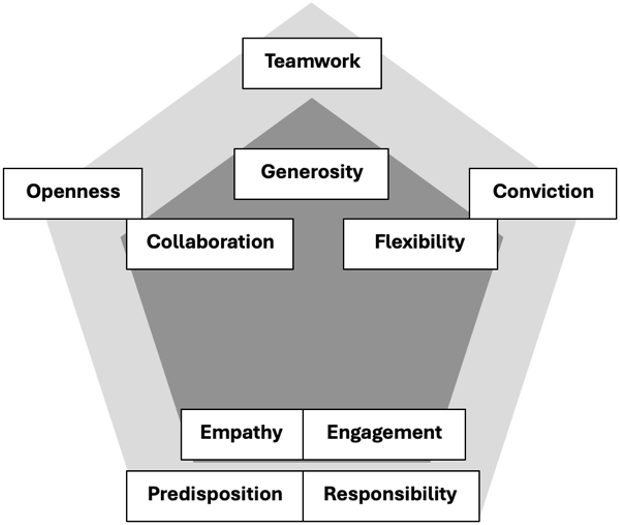
Figure 1 summarizes the characteristics identified in the interviews and offers the reader a clearer illustration of the connections between them.
IV. Discussion
The findings of this study uncover a series of characteristics that, for the most part, are of a personal nature and not acquired in university education or through teaching experience. That being said, it is of interest to identify these characteristics not just to gain a general picture of teacher profiles, but because they could be considered in continuing education programs with the aim of identifying and strengthening these traits in members of co-teaching pairs.
Many of the qualities cited in our results, like empathy, generosity, flexibility, collaboration, engagement, openness, responsibility, predisposition, conviction, and teamwork, may be necessary for any teacher but take on particular relevance in the case of co-teachers. For example, collaboration and teamwork, which are derived from the characteristics of cooperative work proposed by Johnson and Johnson (1999), are key to co-teaching practice.
Co-teaching experts like como Hedin and Conderman (2019) and Karten and Murawski (2020) stress that those who voluntarily form co-teaching pairs experience greater satisfaction and success than those who are induced or compelled to do so by administrative staff, which ties in with the importance of predisposition and conviction identified by this research.
In the same way, Nix (2021) discusses the need for openness by co-teachers to ensure the success of the methodology. In addition, Cook and Friend (1995), Christian-Massey (2018), Huguet (2006), and Rodríguez (2014) argue that flexibility, adaptation, respect, confidence, and commitment are determining factors in achieving good co-teaching performance. Rodríguez notes some significant aspects also reported here, such as responsibility, engagement, and conviction.
It is important to mention that although some previous studies cited above (Cook & Friend, 1995; Rodríguez, 2014) have explored certain qualities desirable in support teachers/classroom assistants (that is, for special education teachers, who have traditionally performed this role in the classroom), the purpose of this study is different: we propose that all co-teachers should possess these characteristics or at least be willing to strengthen them.
In this sense, Friend (2008) suggests that teachers should support the work of their colleagues, have a good sense of humor, and be prepared to set aside their differences as prerequisites for co-teaching. Similarly, an ability to relinquish control is considered the leading quality and is clearly associated with the trait of generosity identified in this study.
The results show that cooperation and communication are highly important in a co-teaching pair (Duran, 2019). This study proposes that it may be worthwhile to set aside dedicated time within the school schedule to develop and consolidate these characteristics, in line with the approach taken by Hedin and Conderman (2019) and Villa et al. (2013), who recommend that planning is carried out in regularly scheduled meetings between co-teachers in school time.
This time can be used to plan and coordinate lessons, establish which competencies will be worked on, and determine how student progress will be evaluated. However, Conderman and Liberty (2018) warn that this space for collaboration is only effective when there is a genuine, active commitment on the part of the co-teaching pair.
In the same vein, Beninghof (2020) notes that all pairs of co-teachers need to find their own style and form of communication, as the behavior and qualities of each member will determine their interaction and the fluidity of communication. This is consistent with findings by Kokko et al. (2021), who maintain that by combining individual skills in co-teaching, collaboration becomes more meaningful and peer learning opportunities are created.
Although teacher profiles within a school may vary widely, it is important to stress the key role played by administrative staff in selecting and training future pairs of co-teachers (Gairín, 2020; Huguet, 2006; Karten & Murawski, 2020). In this respect, one effective strategy could be to select teachers who demonstrate an ability to work in teams, cooperate and coordinate with others. We also recommend keeping in mind the different phases of teaching experience (Huberman, 1990), which may make it easier to form more dynamic, more active co-teaching pairs.
Lastly, gaining knowledge and an understanding of co-teaching techniques through training can ensure more effective practice, in line with Honigsfeld and Dove (2019), who maintain that teacher training is a basic tool for the successful implementation of co-teaching.
V. Conclusions
This study has identified the personal and professional characteristics required of co-teachers, providing a broader view of the skill set that should be considered when selecting teachers for classroom co-teaching. However, these characteristics are not limited to co-teachers and should be developed by teachers generally.
Our findings show that these characteristics foster proactive relationships between co-teaching partners. Similarly, when there is a common understanding, this creates a sense of wellbeing that goes beyond teaching and student learning, strengthening the relationship between co-teachers and facilitating peer learning.
Furthermore, it has been observed that co-teaching pairs are not immune to the challenges that arise in human relationships. However, when both partners work collaboratively despite their individual differences, it becomes easier to overcome difficulties with the support and guidance of administrative staff, which is a key factor for success.
Lastly, the characteristics proposed here are intended as a guide for teachers and administrative staff in selecting suitable teacher profiles for maximum co-teaching success. One must keep in mind that co-teaching pairs should be formed on a voluntary basis and should be compatible. This ensures a positive impact both on students and on participating teachers.
Translation: Joshua Parker
Contribución de autoría
Edwin Triana-Teherán: conceptualization (70%), methodology (70%), formal analysis, writing original draft, review and editing (30%).
Carme Armengol Asparó: conceptualization (30%), methodology (30%), writing original draft, review and editing (70%).
Declaration of no conflict of interest
The authors declare no conflict of interest.
Source of funding
Unfunded research.
References
Abellán-Rubio, J., Arnaiz-Sánchez, P. y Alcaraz-García, S. (2021). El profesorado de apoyo y las barreras que interfieren en la creación de apoyos educativos inclusivos [Support teachers and the barriers that interfere with the creation of inclusive educational support]. Revista Electrónica Interuniversitaria de Formación del Profesorado, 24(3), 237-249. https://doi.org/10.6018/reifop.486901
Almirall, R. y Huguet, T. (2017). Nou decret, noves perspectives per a l’educació inclusiva: Entrevista amb la subdirectora general d’Ordenació i atenció a la diversitat de la Generalitat de Catalunya, Sra. Mercè Esteve [New decree, new perspectives for inclusive education: An interview with the deputy general director of planning and diversity outreach of the Government of Catalonia, Ms. Mercè Esteve]. Àmbits de Psicopedagogia i Orientació, (47), 6-13. https://raco.cat/index.php/AmbitsAAF/article/view/366981
Beninghof, A. M. (2020). Co-teaching that works: Structures and strategies for maximizing student learning. Jossey-Bass.
Chatzigeorgiadou, S. y Barouta, A. (2022). General and special early childhood educators’ attitudes towards co-teaching as a means for inclusive practice. Early Childhood Education Journal, 50, 1407–1416. https://doi.org/10.1007/s10643-021-01269-z
Christian-Massey, R. (2018). Co-teaching: The professional behind the M.A.S.K. TMS’ guide to managing accepting strengthening keystones. Teacher Mod Squad.
Conderman, G. y Hedin, L. (2012). Purposeful assessment practices for co-teachers. Teaching Exceptional Children, 44(4), 18-27. https://doi.org/10.1177/004005991204400402
Conderman, G. y Liberty, L. (2018). Establishing parity in middle and secondary co-taught classrooms. The Clearing House: A Journal of Educational Strategies, Issues and Ideas, 91(6), 222-228. https://doi.org/10.1080/00098655.2018.1524358
Cook, L. y Friend, M. (1995). Co-teaching: Guidelines for creating effective practices. Focus on Exceptional Children, 28(3), 1-16. https://doi.org/10.17161/fec.v28i3.6852
Cook, L. (2004, April 29). Co-teaching: Principles, practices and pragmatics. New Mexico Public Education Department Quarterly Special Education Meeting, Albuquerque, NM. https://eric.ed.gov/?id=ED486454
Decreto 150/2017, de 17 de octubre, de la atención educativa al alumnado en el marco de un sistema educativo inclusivo [Decree 150/2017 of October 17th, on educational support for students in the framework of an inclusive education system]. Diari Oficial de la Generalitat de Catalunya, núm, 7477, de 19 de octubre de 2017. https://portaldogc.gencat.cat/utilsEADOP/AppJava/PdfProviderServlet?documentId=799722ytype=01ylanguage=es_ES
Duran, D. (2019). Aprenentatge docent entre iguals: mestres i escoles que aprenen uns dels altres [Peer learning among teachers: Teachers and schools learning from each other]. Àmbits de Psicopedagogia i Orientació, 50, 47-58. https://doi.org/10.32093/ambits.v0i50.1219
Friend, M. (2008). Co-teach! A handbook for creating and sustaining effective classroom partnerships in inclusive schools. Marilyn Friend.
Friend, M. y Cook, L. (2007). Coteaching. Educational Leadership, 64(5), 48-52.
Gairín, J. (2020). La organización y gestión de centros educativos, ¿Una apuesta pendiente? [School organization and management: A pending challenge?]. Avances en Supervisión Educativa, (33), 1-21. https://doi.org/10.23824/ase.v0i33.682
Gairín, J. y Rodríguez-Gómez, D. (2011). Cambio y mejora en las organizaciones educativas [Change and improvement in educational organizations]. Educar, 47(1),31-50. https://raco.cat/index.php/Educar/article/view/244621
García, M. S. (2002). El profesorado y su práctica docente: la complejidad de los procesos de cambio [Teachers and their teaching practice: The complexity of processes of change]. Investigación en la Escuela, (47), 83-93. https://idus.us.es/handle/11441/51331
Hedin, L. R., Conderman, G., Gerzel-Short, L. y Liberty, L. (2020). Specially designed instruction in middle and high school co-taught classrooms. The Clearing House: A Journal of Educational Strategies, Issues and Ideas, 93(6), 298-305. https://doi.org/10.1080/00098655.2020.1812492
Hedin, L. y Conderman, G. (2019). Pairing teachers for effective co-teaching teams. Kappa Delta Pi Record, 55(4), 169-173. https://doi.org/10.1080/00228958.2019.1659063
Heisler, L. A. y Thousand, J. S. (2021). A guide to co-teaching for the SLP: A tutorial. Communication Disorders Quarterly, 42(2), 122-127. https://doi.org/10.1177/1525740119886310
Hernández, R., Fernández, C. y Baptista, P. (2014). Metodología de la investigación (6a. ed.) [Research methodology (6th ed.)]. McGraw-Hill.
Honigsfeld, A. y Dove, M. G. (2019). Preparing teachers for co-teaching and collaboration, en L. C. de Oliveira (Ed.), The handbook of TESOL in K-12 (pp. 405-421). John Wiley & Sons. https://doi.org/10.1002/9781119421702.ch26
Huberman, M. (1990). Las fases de la profesión docente. Ensayo de descripción y previsión [The phases of the teaching profession. A descriptive and predictive essay]. Qurriculum: Revista de Teoría, Investigación y Práctica Educativa, (2),139-159. https://dialnet.unirioja.es/servlet/articulo?codigo=3607962
Huguet, T. (2006). Aprender juntos en el aula. Una propuesta inclusiva [Learning together in the classroom. An inclusive proposal]. Graó.
Instituto Nacional de Evaluación Educativa. (2009). P5. Trabajo en equipo de los profesores en educación primaria [P5. Teamwork by teachers in primary education]. MECD, Instituto de evaluación. Sistema estatal de indicadores de la educación. https://www.educacionyfp.gob.es/inee/dam/jcr:dbeb91e3-448b-47ad-9720-fd20b3446231/2009p51.pdf
Johnson, D. W. y Johnson, R. T. (1999). Making cooperative learning work. Theory into Practice, 38(2), 67-73. https://doi.org/10.1080/00405849909543834
Karten, T. J. y Murawski, W. W. (2020). Co-teaching do's, don'ts, and do betters. Association for Supervision & Curriculum Development.
Kokko, M., Takala, M. y Pihlaja, P. (2021). Finnish teachers’views on co‐teaching. British journal of special education, 48(1), 112-132. https://doi.org/10.1111/1467-8578.12348
Krichesky, G. J. y Murillo F. J. (2018). La colaboración docente como factor de aprendizaje y promotor de mejora. Un estudio de casos [Teacher collaboration as a factor for learning and school improvement. A case study]. Educación XXI, 21(1), 135-156. https://doi.org/10.5944/educxx1.20181
Lalama, A. del R. (2018). Inclusión educativa: ¿Quimera o realidad? [Educational inclusion: Chimera or reality?] Revista Conrado, 14(62), 134-138. https://conrado.ucf.edu.cu/index.php/conrado/article/view/695
Ley Orgánica 3/2020, de 29 de diciembre, por la que se modifica la ley orgánica 2/2006, de 3 de mayo, de educación [Organic Law 3/2020 of December 29th, by which Organic Law 2/2006 of May 3rd, on education, is amended]. Boletín Oficial del Estado, 340, de 30 de diciembre de 2020, 122868–122953. https://www.boe.es/boe/dias/2020/12/30/pdfs/BOE-A-2020-17264.pdf
Martínez, E. F. (2020). Colaboración docente dentro del aula: modelos, barreras y beneficios [Teacher collaboration in the classroom: Models, barriers, and benefits]. In M. Fernández-Enguita (Coord.), La organización escolar. Repensando la caja negra para poder salir de ella (pp. 83-93). ANELE-REDE. https://anele.org/pdf/libros/Libro-organizacion_escolar.pdf#page=49
McTigue, E. M., Gourvennec, A. F. y Solheim, O. J. (2022). Key question for literacy co‐teachers: What possibilities do we have together? The Reading Teacher, 76(2), 176-190. https://doi.org/10.1002/trtr.2121
Nix, J. M. L. (2021). Co-teachers’ perceptions of collaborative EFL teaching: A case study in Taiwan. Asia Pacific Education Review, 22, 595-608. https://doi.org/10.1007/s12564-021-09684-y
Obando-Castillo, G. (2016). Aproximación al principio de colaboración como clave para la práctica de la codocencia [An approach to the principle of collaboration as key to the practice of co-teaching]. Educationis Momentum, 2(1), 93-107. https://doi.org/10.36901/em.v2i1.80
Palacios, M. L., Toribio, A. y Deroncele, A. (2021). Innovación educativa en el desarrollo de aprendizajes relevantes: una revisión sistemática de literatura [Educational innovation in the development of relevant learning: A systematic literature review]. Revista Universidad y Sociedad, 13(5), 134-145. https://rus.ucf.edu.cu/index.php/rus/article/view/2219
Ríos, D. (2009). Características personales y profesionales de profesores innovadores [Personal and professional characteristics of innovative teachers]. Revista Latinoamericana de Estudios Educativos, 39(1-2), 153-169. https://rlee.ibero.mx/index.php/rlee/article/view/428
Rodríguez, F. (2014). La co-enseñanza, una estrategia para el mejoramiento educativo y la inclusión [Co-teaching, a strategy for educational improvement and inclusion]. Revista Latinoamericana de Educación Inclusiva, 8(2), 219-233. https://educrea.cl/wp-content/uploads/2017/08/DOC1-co_ensenanza.pdf
Saldaña, J. (2021). The coding manual for qualitative researchers. (4a. ed.). Sage.
Sanahuja, J. M., Mas, O. y Olmos, P. (2018). El rol del profesorado de apoyo en el aula regular de un instituto de educación secundaria [The role of support teachers in the regular classroom of a secondary school]. Revista Complutense de Educación, 29(4), 1041–1057. https://doi.org/10.5209/RCED.54608
Sebald, A., Myers, A., Frederiksen, H. y Pike, E. (2021). Collaborative co-teaching during student teaching pilot project: What difference does context make? Journal of Education, 203(1), 18-31. https://doi.org/10.1177/00220574211016403
Segura, C. M. A. y Quiroz, A. M. (2019). Desde el diseño universal para el aprendizaje: el estudiantado al aprender se evalúa y al evaluarle aprende [From universal design for learning: Students assess themselves when learning and learn when assessed]. Revista Educación, 43(1), 734-754. https://archivo.revistas.ucr.ac.cr/index.php/educacion/article/view/28449/36695
Suárez-Díaz, G. (2016). Co-enseñanza: concepciones y prácticas en profesores de una Facultad de Educación en Perú [Co-teaching: Teachers’ conceptions and practices in a school of education in Peru]. Revista Electrónica de Investigación Educativa, 18(1), 166-182. https://redie.uabc.mx/redie/article/view/786
Triana, E. J., & Armengol, C. (2022). Beneficis de la docència compartida des de la perspectiva de l’alumnat d’Educació Primària [Benefits of co-teaching from the perspective of elementary school students]. Àmbits de Psicopedagogia i Orientació, (56), 16-29. https://doi.org/10.32093/ambits.vi56.5037
Villa, R. A., Thousand, J. S. y Nevin, A. I. (2013). A guide to co-teaching: New lessons and strategies to facilitate student learning. Corwin Press.