Learning to Learn in Spanish Universities: A Transversal Competence?
 Evelyn Eunise Moctezuma-Ramírez
 Universidad Autónoma del Estado de Morelos, México Fran J. García-GarcíaUniversidad de Valencia, España Cruz Pérez-PérezUniversidad de Valencia, España Ana Esther Escalante FerrerUniversidad Autónoma del Estado de Morelos, México Teresa YurénUniversidad Autónoma del Estado de Morelos, México
How to cite: Moctezuma-Ramírez, E. E., García-García, F. J., Pérez-Pérez, C., Escalante, A. E. y Yurén, T. (2024). Aprender a aprender en las universidades españolas, ¿una competencia transversal? Revista Electrónica de Investigación Educativa, 26, e09, 1-16. https://doi.org/10.24320/redie.2024.26.e09.4985

Abstract
This study aims to understand how the “learning to learn” (LtL) competence is built into university curricula and the extent to which students are expected to learn to learn in college. We analyzed LtL components in the syllabi of Spanish universities, specifically in pedagogy and telecommunications engineering degrees, reviewing a total of 20,321 competencies set out to be developed over 228,000 hours of instruction. A theoretical model was employed to detect these components and we analyzed their association with disciplinary and transversal competencies. The results show an intention to teach LtL for the discipline and not simply as a transversal competence. We also observed a greater emphasis on information processing than on collaborative learning and motivation. We discuss the theoretical implications of this competence and how it can be transferred between disciplines in higher education.
Keywords: learning to learn, competencies, skills development, higher education
I. Introducción
In the last decade, universities have replaced time-based curricula (Kelly & Columbus, 2016) with learning-centered teaching and competency-based curricula (Echols et al., 2018; Gargallo, 2017). The social and labor demands of an increasingly globalized world require the ability to demonstrate specific knowledge and skills; it is no longer sufficient simply to show evidence of a certain number of hours of study. Indeed, since the late 1990s, proficiency in certain key competencies has been necessary to remain in the job market. It was at that time that the OECD launched the DeSeCo Project to define and select these competencies. Years later, the European Commission (2018) prepared a report detailing eight key competences, including learning to learn (LtL). The idea was to educate citizens capable of lifelong autonomous learning, and member states were to implement the proposal in their education systems.
The LtL competence is the ability to organize and regulate learning in a way that becomes increasingly more efficient and autonomous, based on objectives. This entails the acquisition of new knowledge, skills, and attitudes to solve problems by skillfully applying solutions in different contexts, individually or in groups, in both personal and professional spheres. Mastering this competence means gaining awareness of one’s own abilities and limitations, planning learning tasks effectively, and managing learning strategies, resources, techniques, and skills efficiently. It also implies a capacity to self-assess and self-regulate cognitive and affective performance, optimizing abilities to overcome obstacles. It means maintaining intellectual curiosity and intrinsic motivation to face and successfully overcome challenges, maintaining an ethical commitment and positive attitude toward continuous improvement.
Spanish law provides that students should know how to learn upon completing compulsory schooling1. Nonetheless, many university students drop out during their first year (21.6% on average over the 2011-2017 period, according to official data from the Ministry of Universities2). Dropout rates in the early stages of degree programs and our own teaching experience have led us to suspect that students may not have learned to learn adequately in previous stages of education. This is compounded by the fact that university professors expect students to learn and work autonomously (Martínez & Moreno, 2007), and these expectations do not appear to be met. For the students, this poses the risk of a Pygmalion effect (Murphy & Gash, 2020), which can have an adverse effect on their beliefs about how they learn and their future learning outcomes.
From this perspective, over 20% of public spending on higher education institutions in recent years has been squandered, in large part due to shortcomings in the education system itself. Periods of crisis (like the financial crisis of 2008 and the health crisis of 2020) lay bare the weaknesses of the system and the need to reshape models of teaching and learning. In these circumstances, efficient use should be made of available resources. One option would be for students to continue learning to learn in higher education, but there are no curricular analyses on the development of this competence that would shed light on what students can expect once in college. This study clears up some uncertainties about curricular planning of LtL in two university degrees with different structures.
1.1 A rigid but transparent curriculum
The academic community only reached a consensus on what LtL is (Deakin-Crick et al., 2014) in the last two years, when a construct was designed and validated (Gargallo et al., 2020, 2021). However, these advances in theory have not clarified whether it is a single competence. Some authors have defined it as a meta-competence, given that it includes different sets of knowledge, skills, and attitudes (Caena & Redecker, 2019). In this sense, an individual who knows how to learn will know how to do so in different contexts and situations, engaging various competences to persist in learning. This being the case, it would not be unusual for students to start college and not know how to learn.
The complexity of LtL can lead to an excessive focus on some of its components, while others are forgotten in educational planning and in classrooms. This state of affairs prompts a reflection on the way students are taught to learn, particularly in universities like those in Spain. Syllabi in Spain are considered a learning contract between teachers and students (san Martín et al., 2016), which includes an explicit record of the characteristics of each course (objectives, learning content, competences to be attained, method, assessment criteria, etc.). Publishing the syllabi helps to improve the transparency of the education provided and indicates which skills must be developed in any given subject.
In contrast to the classical theory of curriculum (Gimeno, 1981), more recent developments have supported flexibility in curricular planning (Quinn, 2019). There is an understanding that education systems must be repurposed to educate individuals who know how to learn and can face the constant changes of modern-day societies (Säfström, 2018). The degree programs and curricula of Spanish universities provide some degree of assurance and transparency and, above all, a foundation to explore the extent to which students are expected to learn to learn over the course of their degree. Even so, the limitation of analyzing curricula, rather than teaching practices, is evident.
Competences are only one part of a curriculum, which also sets out the parties involved, objectives, activities, resources, and standards of behavior and interaction. These aspects are brought together to enable education to meet its goal of responding to certain social demands, lending each curriculum a structural quality. Accordingly, any change to a curriculum transforms its meaning. An analysis of competences is therefore of interest, besides being novel. Before determining how learning is being taught in the classroom, it would be reasonable to establish to what extent there is an intention to do so, and if this intention exists, which components are being attributed to a competence of such complexity.
1.2 More than a transversal competence
Following the Bologna reform in Spanish higher education, various studies were published analyzing the competences of curricula. One such study found that only some universities had a formal, common repertoire of generic competences, which failed to cover 20% of proposed courses (Sánchez-Elvira et al., 2011). Nearly a quarter of institutions made no reference at all to these competences in descriptions of their degree programs or courses, and very few universities mentioned them in their degree verification reports (memorias de verificación), a requirement of the National Agency for Quality Assessment and Accreditation (ANECA). Despite this, we are aware of the difficulty of developing a competence like LtL in the classroom, especially in the absence of a consensus on transversality in the academic curriculum.
Curricular analyses exist at other levels of education (Stonkuvienė, 2018; Yelland & Wai, 2018), but universities offer specialized education oriented toward performance in one discipline rather than a transversal education (Millar, 2016). This makes it all the more important to analyze planned competences in higher education, as findings at other levels are not comparable in understanding the situation in universities.
In any case, the analyses conducted with respect to the Bologna reform are not recent and there may have been changes to syllabi since these studies were published. It is therefore fitting to ask to what extent students are expected to learn to learn in college, how the transversal nature of this competence is addressed in university curricula, and whether LtL is envisaged as a single competence, a grouping akin to a meta-competence, or various competences in isolation.
II. Method
This study analyzed competences in two degree programs offered by Spanish universities. The degree in pedagogy was chosen as it lies within the field of education and it would be reasonable to expect a higher presence of the LtL competence in this program than in other areas of knowledge (Sola et al., 2020), and the telecommunications engineering degree was chosen at random in order to contrast the way the LtL competence is envisaged in two degrees from different fields with a different curricular structure, providing the results with external validity (Esterling et al., 2021). Each degree program represents a study population, and the findings of this research are inferred from this representative sample.
Our research included 23 degree programs in pedagogy, with 1,032 courses, and 14 in telecommunications, with 864 courses, and their respective syllabi. This meant that the sample covered 98.33% of curricula for both degrees to ensure the results could be generalized. The two degree programs translate into 5,520 and 3,600 ECTS (European Credit Transfer and Accumulation System) credits respectively, equivalent to 138,000 study hours with 12,753 competences in pedagogy and 90,000 study hours with 7,568 competences in telecommunications. In most cases, the degree programs were distributed differently across provinces (see Figure 1). The National University of Distance Education (UNED) offers both degree programs nationwide and therefore was excluded from the map to enable display of the other programs offered.
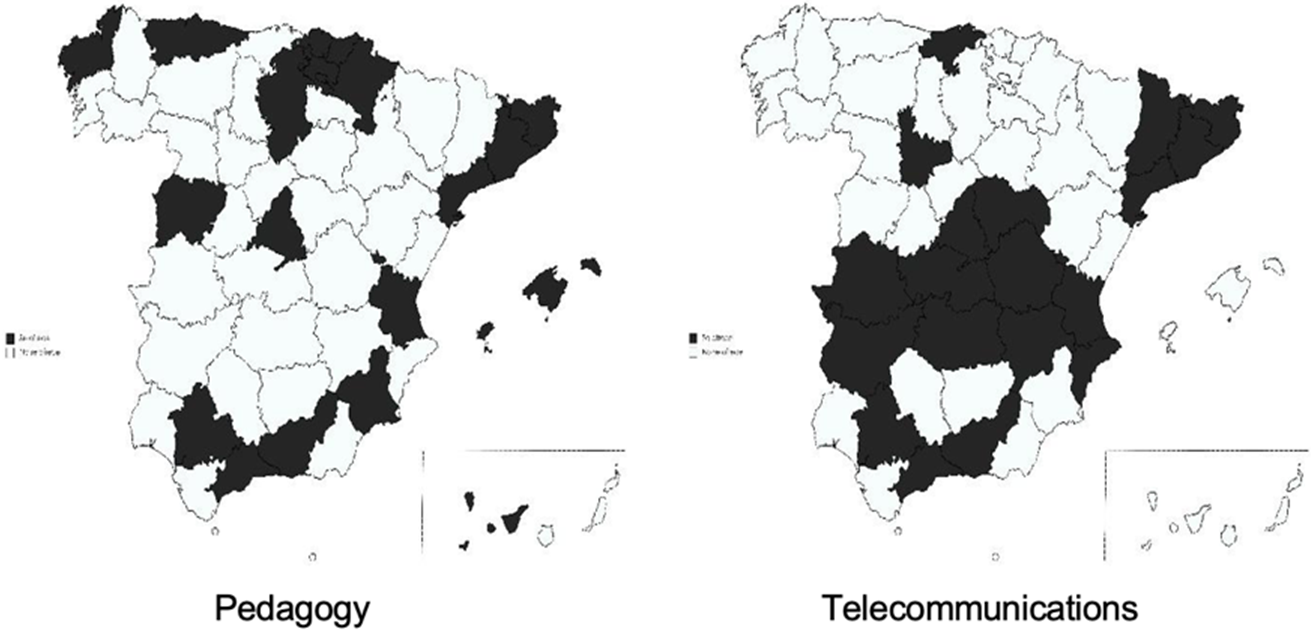
Telecommunications engineering included more courses in each curriculum but had fewer curricula available throughout Spain. Although the number of programs offered in pedagogy was greater (54%), the total number of courses in all curricula taken together was similar in both programs.
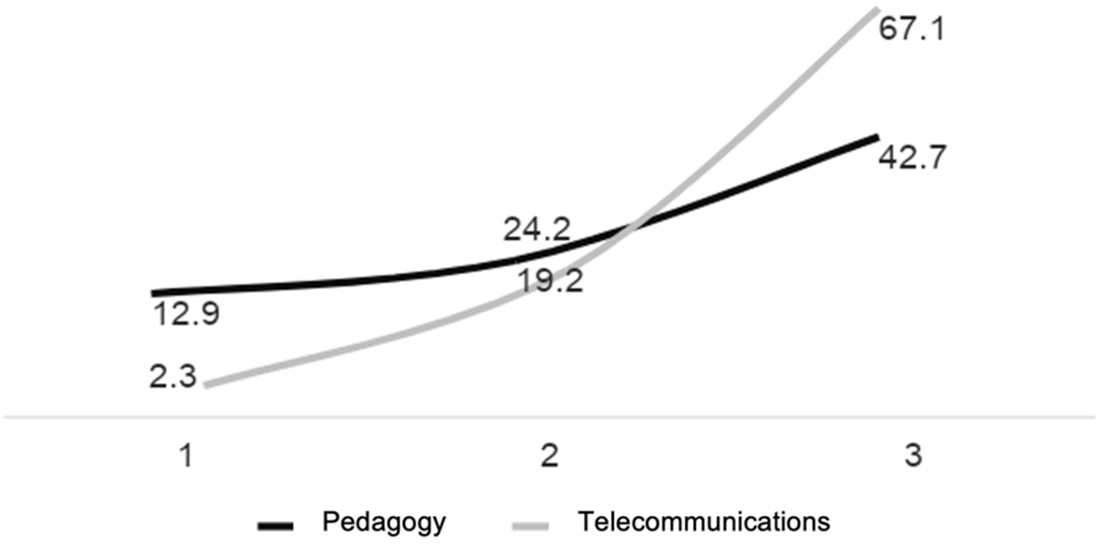
As students advanced in their degrees, the number of elective courses offered increased more steeply in telecommunications than in pedagogy (see Figure 2).
Materials. The universities offering degrees in pedagogy and telecommunications were selected from the Register of Universities, Centers, and Qualifications (RUCT), an official and reputable repository maintained by Spain’s Ministry of Universities. After this search, we accessed the websites of the selected universities to retrieve all the course syllabi, the main documents used to extract information on competences.
We used the theoretical model proposed by Gargallo et al. (2020) to systematize our own database in a way that would allow us to analyze LtL competences in the syllabi. This model was selected because it provides a definition and a validated construct (Gargallo et al., 2021), with 22 operational components distributed in 5 dimensions (Table 1).
| Dimensions | Subdimensions | |
|---|---|---|
| Cognitive | S1. Effective information management. | |
| S2. Oral communication skills. | ||
| S3. Written communication skills. | ||
| S4. Knowledge and use of non-verbal language. | ||
| S5. Use of ICT. | ||
| S6. Critical and creative thinking. | ||
| Metacognitive | S7. Knowledge of oneself, the task, and strategies to handle it. | |
| S8. Planning, organization, and time management. | ||
| S9. Self-evaluation, control, and self-regulation. | ||
| S10. Problem solving. | ||
| Affective-Motivational | S11. Motivation and positive attitude toward learning and improvement. | |
| S12. Internal attributions. | ||
| S13. Self-concept, self-esteem, self-efficacy. | ||
| S14. Physical and emotional well-being. | ||
| S15. Emotional self-regulation and control of anxiety. | ||
| Social-Relational | S16. Social values. | |
| S17. Attitudes of cooperation and solidarity; interpersonal relationships. | ||
| S18. Teamwork. | ||
| S19. Control of environmental conditions. | ||
| Ethical | S20. Responsibility in learning. | |
| S21. Civic and moral attitudes and values. | ||
| S22. Respect for ethical and deontological codes. | ||
| Note: Taken from Gargallo et al. (2020) | ||
Procedure. Once the course syllabi had been downloaded, competences were classified based on the program to which they applied. The competences in pedagogy and telecommunications were then classified separately in the database as disciplinary competences, even if they included transversal content. This classification included content such as “evaluating educational policies, institutions, and systems” or “programming network and distributed telematic services and applications.” Competences that contained only transversal aspects were coded as such, including content such as “teamwork” or “autonomous learning.” Vaguely defined competences, those with multiple possible interpretations, and those that involved carrying out activities but did not have a learning outcome were all excluded from the analysis. Ultimately, a total of 12,426 disciplinary and 7,895 transversal competences were classified.
Subsequently, two researchers from the team reviewed the database to verify that the different competences were correctly classified. This ensured the output would be reliable and high quality. Then, the data was transferred to SPSS, R and Excel analysis software for processing.
We proceeded to determine the presence of the components of the LtL theoretical model in the competences in the syllabi. The procedure involved recording the presence or absence of each component in each competence analyzed. A value of 1 was assigned when the component was present and 0 when absent. This yielded a matrix with a binary code to represent a dichotomous variable, but the data was still inadequate; the matrix did not reflect the presence of a given component in relation to the number of study hours for each course. Therefore, the matrix (0,1) was multiplied by the number of credits of the course corresponding to the syllabus where the competence featured. The result was divided by the total number of credits in the curriculum to obtain a score relative to the total degree program. This provided information relating to the maximum possible presence of LtL components, as it is impossible to determine exactly how much study time teachers devote to each of the competences included in the syllabus.
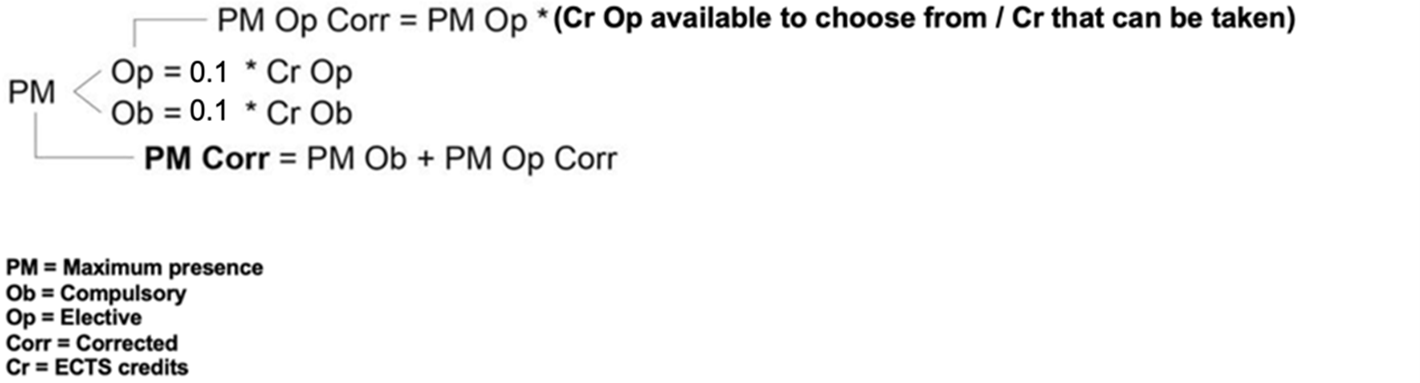
These scores relative to the ECTS credits for each course led us to consider the fact that not all students take the same courses to earn elective credits. As a result, a correction needed to be made to the maximum presence in the total elective credits for each degree program. After all, students cannot take all elective credits available and the total number of credits available is greater than the actual number taken by students. The solution was to first add up the maximum presence of LtL components that had been multiplied by compulsory credits, and then add up all those that had been multiplied by elective credits. This produced a score for compulsory maximum presence (PM Ob, in Spanish) and a separate score for elective maximum presence (PM Op, in Spanish) for each curriculum. The next step was to correct the PM Op score to reduce the value obtained from the total available elective credits, making an adjustment to reflect the actual number of elective credits that can be taken in each degree program.
The score for corrected elective maximum presence (PM Op Corr, in Spanish) was obtained by dividing the number of elective credits available to choose from by the total number of credits that could be taken. This quotient was then multiplied by PM Op, obtained from all elective credits offered in any given degree program. After calculating this correction, we added PM Ob and PM Op Corr, obtaining a score that reflected the corrected maximum presence (PM Corr, in Spanish) of the components of the LtL competence in each curriculum. Figure 3 summarizes the procedure employed to calculate each score.
We also calculated an LtL rate by dividing the number of competences that included LtL components by the total number of competences included in each course. This rate was expanded to curricula using the same calculation, applied to the sum of competences for all courses in a curriculum. Similarly, we obtained a transversality rate using the same procedure, considering transversal competences rather than competences that included LtL components. We analyzed the trend (Spearman, 1904) between these two rates to rule out any correlation problems that may lead to similar conclusions for transversality and the presence of LtL components.
III. Results
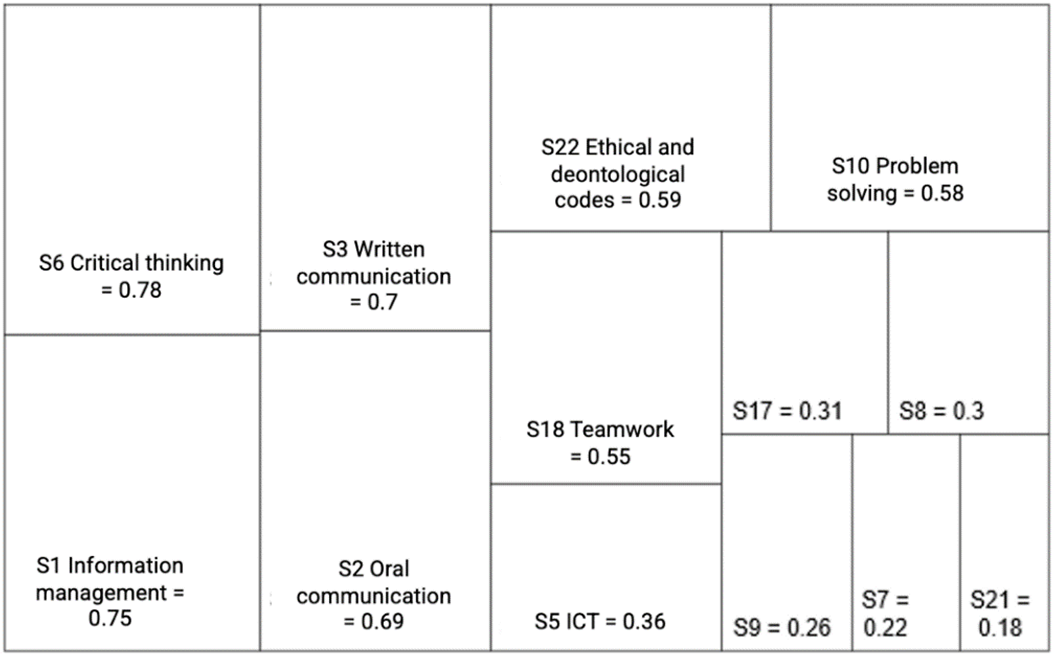
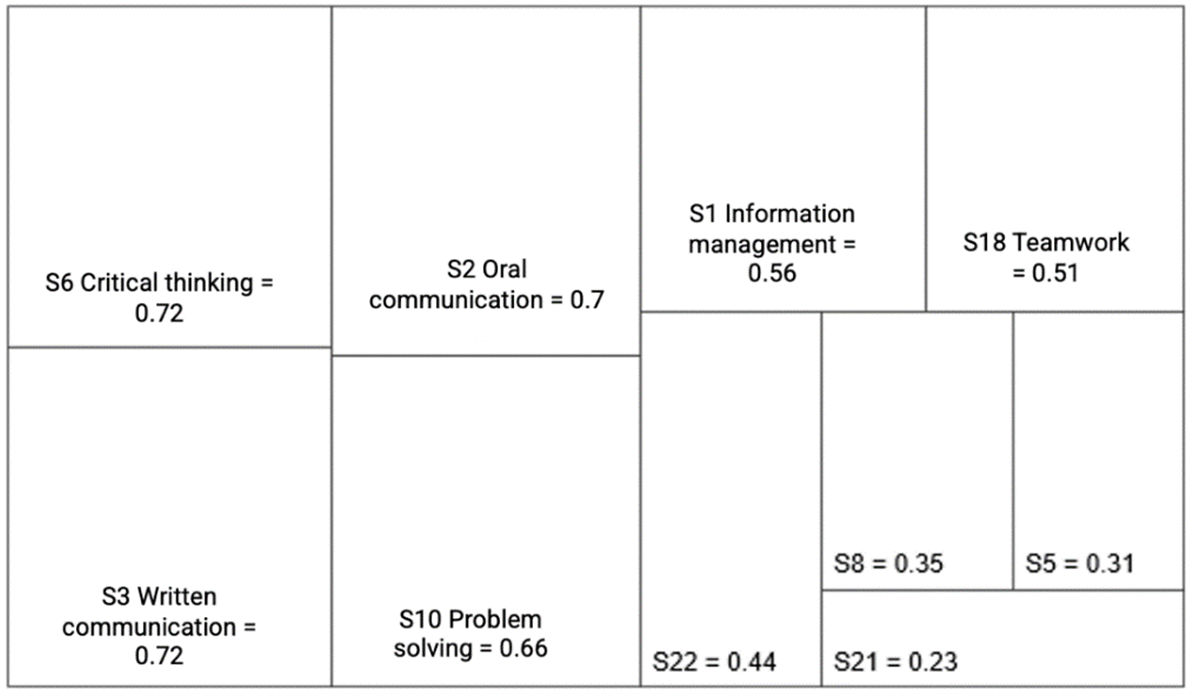
Critical thinking (S6) and communication skills (S2 and S3) were the most common LtL components, both in pedagogy (Figure 4) and in telecommunications (Figure 5). A similar distribution was observed in the PM Corr in both programs, although in pedagogy, information management (S1) was more prevalent than other components, while telecommunications placed a greater focus on problem solving (S10).
The syllabi did not include LtL components to correctly attribute learning to one’s own efforts or to maintain physical and emotional well-being. In pedagogy, there were components relating to non-verbal communication, self-concept, self-esteem, self-efficacy, emotional self-regulation, and anxiety and context control, but none of these were found in the telecommunications syllabi.
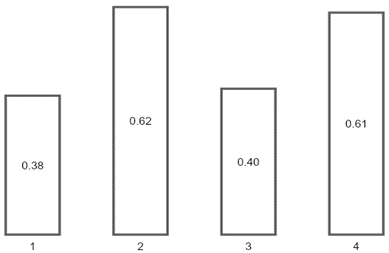
The transversality and LtL rates were similar in the two degree programs, as shown in Figure 6.
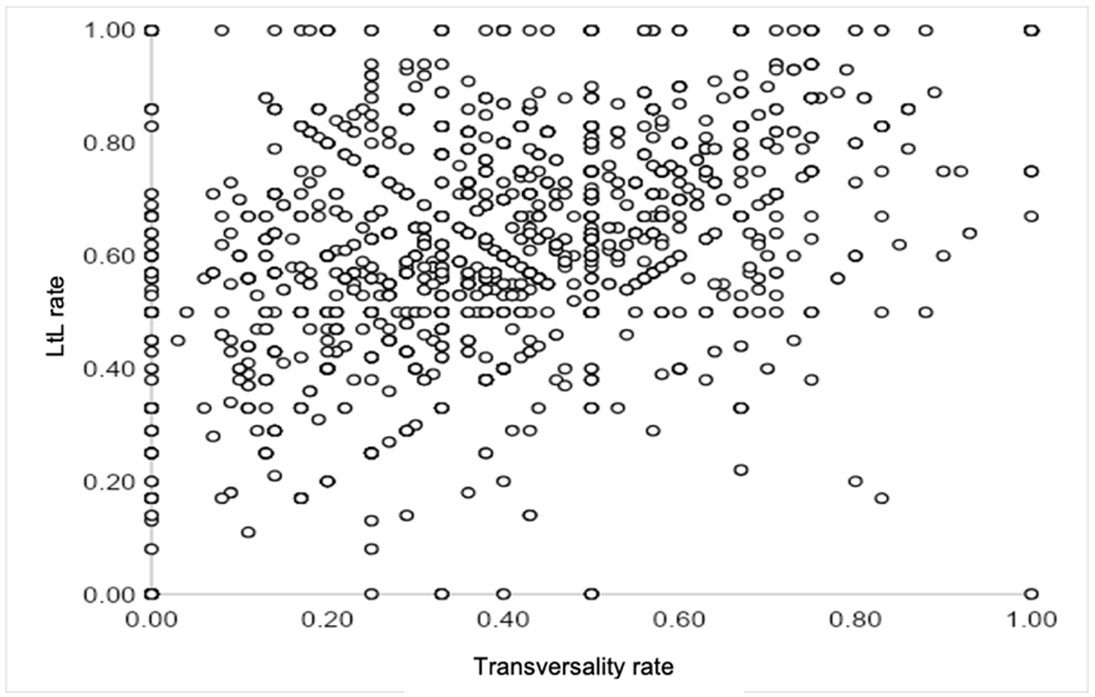
However, an analysis of the monotonic trend found no relationship between one rate and the other. This was true both for pedagogy (rho = .380; p = .000) and telecommunications (rho = .457; p = .000). This means that the proportion of transversal competences within a degree program neither increased nor decreased based on the percentage of competences with LtL components.
Figure 7 shows a scatter plot with null correlation between the two rates. It is notable that there were more competences associated with LtL than competences that were purely transversal, raising the suspicion that components from the model proposed by Gargallo et al. (2020) had been applied to disciplinary competences.
Competences with LtL components correlated positively, not only with transversal competences (rho = .803; p = .000) but also with disciplinary competences (rho = .703; p = .000).3 This result brings to mind the water bucket analogy, as illustrated in Figure 8.
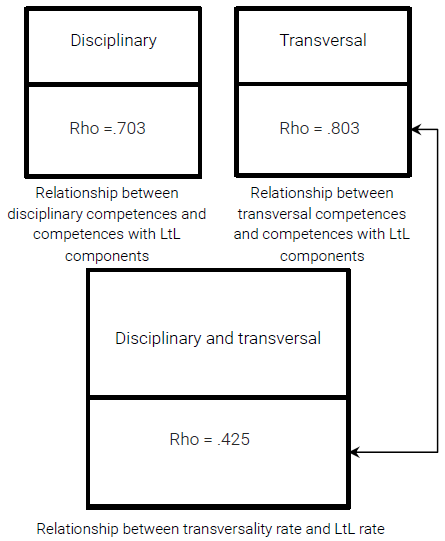
If we pour the amount of relationship found between competences with LtL components and disciplinary competences into a bucket that only holds disciplinary competences, the bucket will fill to 70%. If we do the same with the relationship found with transversal competences, in a bucket that only includes transversal competences, that bucket will fill to 80%. Both buckets would be full enough to claim that there is a significant relationship. Consider, however, another bucket with twice the capacity, which can hold all types of competence. The LtL and transversality rates are calculated based on the full set of competences in the syllabi. As a result, this last bucket is a better representation of these two rates in the degree programs. If we pour the water from the transversal competence bucket into this new bucket that holds all competences, the bucket will fill to 40% of its capacity as it is approximately twice as large. In this bucket, the amount of relationship is less significant as it is missing the association between competences with LtL components and disciplinary competences.
A bucket model like this does not exactly equate to our results on competences in the syllabi examined. This study did not analyze the same number of disciplinary and transversal competences, so the first two buckets would not be the same size. This and other details suggest that this analogy can be thought of as an illustrative model to understand why there was no correlation between the two rates. Not only did we find disciplinary competences with LtL components, but these competences coexisted in the same course with other transversal competences, which also contained LtL components.
IV. Discussion and conclusions
4.1. A transversal competence?
The results were similar in two degree programs from different areas of knowledge and with different curricular structures, raising the suggestion that the LtL competence has been designed with a transversal perspective in educational programs, at least in the degree programs explored here. The absence of any correlation between the transversality and LtL rates is therefore striking. The transversality rate reflects the proportion of competences that include purely transversal components, so it would be reasonable also to believe that the LtL competence was to some extent applied to disciplinary competences.
This does not mean that LtL is not a transversal competence, as defined in monographs on the subject (Deakin-Crick et al., 2014). After all, the European Union includes LtL as a key competence for lifelong learning and successfully tackling the social and occupational challenges of the future (European Commission, 2018). Even so, there is a difference between lifelong learning for life itself and lifelong learning to improve in a particular type of work or a certain discipline, such as pedagogy or telecommunications.
Applying the LtL competence to disciplinary content means that students will need to acquire prior knowledge of other disciplines in the future. Otherwise, they will be unable to transfer this competence from one discipline to another. It is true that technical language is used in any discipline, but this language is not necessarily the same from one discipline to another.
Let us take an example. Students who have learned to learn will be able to use the technical language of the discipline in which they learned it. They will also know that this language can be used to facilitate new learning but will need prior knowledge of the meaning of the technical language of another discipline to enable transfer. This prior understanding is necessary to link new learning to what students already know and to expand mental schemata, at least from a constructivist view of learning (Ausubel, 1968).
Similarly, in any discipline critical thinking can be applied and information can be searched in specialized databases. However, the criteria for reasoning and database configurations may not be the same from one discipline to another. Students who intend to transfer the competence will need to learn content associated with the format in which the competence is applied before it can be transferred and used. This format content functions like an adapter for an electrical outlet. The adapter is needed to allow the flow of the “current” of learning toward the new discipline, even if the student already knows how to learn in the previous known discipline (Figure 9).
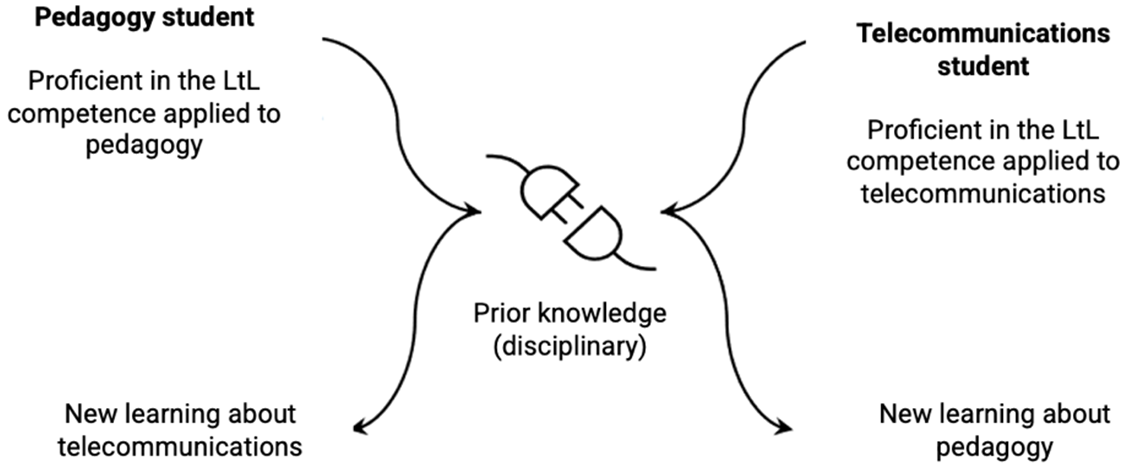
There is an understanding that a transversal competence should be applicable to any discipline, as is perhaps the case with civic and social competences. After all, good citizens, regardless of their disciplinary competences, can be described as such insofar as they help to improve the community they live in, and this does not necessarily appear to involve the transfer of learning between different disciplines. But in the case of the LtL competence, there is indeed a necessary transfer between disciplines, assuming one has learned to learn any learning content. Certainly, this idea means knowing how to learn prior knowledge from disciplines other than those already known in order to transfer the LtL competence, but this must be learned anyway to enable transfer, and this essential factor sets this competence apart from other transversal competences.
Otherwise, in this research we treated the LtL components as different competences (Caena & Redecker, 2019; Deakin-Crick et al., 2014), rather than as a single competence, following the framework of the syllabi in the sample. The PM Corr scores of the different LtL components varied quite considerably, and there were even components of the theoretical model that did not feature in the program competences. It would appear that LtL was envisaged as a set of distinct competences, leading us to surmise that perhaps the teachers who designed the syllabi did not even think of consolidating these competences as a grouping akin to a meta-competence, but rather viewed them as isolated competences that could support overall education as it is set out in the syllabus.
4.2 Individualized learners
LtL components associated with individual learning obtained higher PM Corr scores than components associated with social learning. It would seem that teachers designed the syllabi following traditional approaches to information processing (Lachman et al., 1979; Miller, 2011) or with basic problem-solving concepts in mind (Barrows & Tamblyn, 1980). At no time were there any references to information processing as it is understood in classical and current models of self-regulated learning (Winne & Hadwin, 1998), including metacognitive strategies. Also absent were references to co-regulation of learning for teamwork (Hadwin et al., 2019), although the curricular structure did include learning to work in groups generally and the production of group work.
This was not just a matter of innovation – whether more recent learning models were taken into consideration or not – but of prioritizing individual learning over social learning. As a matter of fact, not only was the PM Corr greater for components associated with individual learning, but learning from figures of reference, like a teacher or a more advanced peer, was almost entirely absent from the syllabi. This disregards traditional approaches like learning by imitation, a feature of Bandura’s (1986) social cognitive theory. By contrast, the theoretical model used for this analysis included components of this nature, such as the ability to seek optimal help with and from others to learn something specific. Moreover, the lack of components relating to co-regulation of learning points to a disconnect from the interdisciplinary factor, as knowing how to work with other professionals is important in degree programs like pedagogy and telecommunications.
Some of the most recent studies on this subject argue that cognitive and metacognitive components are more important for LtL than other factors, like the social or affective factors (Radovan, 2019). Indeed, while they may carry greater weight in explaining autonomy in learning by university students, cognition may be dependent on students’ beliefs about self-regulating their learning (Vosniadou et al., 2021). Ultimately, the social and affective components of learning should not be dismissed. Our results showed an underlying focus on individualization in the way the LtL competence was conceived, but we were unable to explain why this is the case. It may be due to a lack of knowledge about this competence on the part of some teachers. This would explain why the competences lag behind advances in research on the subject, but it is odd that the same thing should occur in both pedagogy and telecommunications. At least in the field of education, we would expect teachers to be familiar with the learning process of their students.
4.3 Limitations and emerging research
Although the results of this study can be generalized to these two degree programs, more university degrees should be examined to validate the conclusions. While analyzing the pedagogy and telecommunications degrees separately provides some degree of external validity, this should be strengthened in future research by broadening the study population.
The syllabi in the sample are not mere declarations of intent. They are binding on teachers and form the basis for the entire educational strategy of a course. But they only reflect the intentions of teachers, and we cannot know what exactly may be happening in classrooms. Our findings do not provide certainty that teaching practices will or will not be implemented in the intended manner. These practices should be studied separately to ascertain which aspects are being followed and which are not. This is what led us to calculate an approximate score, as in the PM Corr, rather than a score reflecting the exact presence of components. Despite this, understanding the intentions reflected in syllabi helps to provide insight into the education taking place in classrooms.
There is still uncertainty surrounding the priority given to individual learning components over social learning. Researchers should shed light on this issue by employing self-perception tools with the teachers who design syllabi so that their perspectives can be taken into account. That would help to better understand the results of this study.
A similar situation exists with the sense of transversality attributed to the LtL competence. It would be interesting to review research on conceptualization in this respect and develop our understanding of LtL as a transversal meta-competence, as it includes disciplinary nuances when proposed as part of a university education program. After all, universities offer specialized, discipline-focused education.
4.4 Implications for practice
Our study results showed that some LtL components were lacking in syllabi, while others were repeated across many subjects. Teachers who design courses should therefore coordinate with other courses within the same program. This would prevent overlapping and enable the inclusion of as many LtL components as possible. This also means considering the fact that some LtL components are acquired in conjunction with others, such as communication skills, which are associated with critical and creative reasoning, as both involve producing and organizing ideas.
It is therefore necessary to ensure teachers are trained to improve LtL planning throughout college education. If teachers do not know how to plan LtL, students will be hard-pressed to acquire and develop these skills. Further, any such training should be provided by an expert on the subject, given that our results showed significant limitations in planning LtL even in the field of education.
Based on this study, transferring LtL requires prior disciplinary knowledge. When students tackle a new subject, they will need to connect what they know about LtL with subject-specific knowledge. It is important that these learning needs are recognized in syllabi.
Translation: Joshua Parker
Author contributions
Evelyn Moctezuma-Ramírez: conceptualization; research; methodology; data processing; formal analysis; writing of first draft; validation; review and editing.
Fran J. García-García: conceptualization; research; methodology; data processing; formal analysis; writing of first draft; validation; review and editing.
Cruz Pérez: supervision; validation; project administrator; procurement of funding.
Ana Esther Escalante: research; data processing; validation.
Teresa Yurén: supervision; validation; project administrator; procurement of funding.
Declaration of no conflict of interest
The authors declare no conflict of interest.
Source of funding
Research funded by the Ministry of Economy, Industry and Competitiveness, Spain (Code EDU2017-83284-R); the Ministry of Education, Culture and Sport, Spain (Code FPU17/00156) and the National Council for Science and Technology (CONACyT), Mexico (National Scholarships [Traditional] 2020-2 [2020-000026-02NACF-19326]).
References
Ausubel, D. P. (1968). Educational psychology. A cognitive view. Holt, Rinehart, and Winston.
Bandura, A. (1986). Social foundations of thought and action: A social cognitive theory. Prentice-Hall.
Barrows, H. S. y Tamblyn, R. M. (1980). Problem-based learning: An approach to medical education. Springer.
Caena, F. y Redecker, C. (2019). Aligning teacher competence frameworks to 21st century challenges: The case for the European Digital Competence Framework for Educators (DIGCOMPEDU). European Journal of Education, 54(3), 356–369. https://doi.org/10.1111/ejed.12345
Deakin-Crick, R., Stringher, C. y Ren, K. (2014). Learning to learn. International perspectives from theory and practice. Routledge.
Echols, D. G., Neely, P. W. y Dusick, D. (2018). Understanding faculty training in competency-based curriculum development. The Journal of Competency-Based Education, 3(2). https://doi.org/10.1002/cbe2.1162
Esterling, K. M., Brady, D. y Schwitzgebel, E. (2021). The necessity of construct and external validity for deductive causal claims. OSF Preprints. https://doi.org/10.31219/OSF.IO/2S8W5
European Commission. (2018). Council Recommendation of 22 May 2018 on key competences for lifelong learning. https://bit.ly/2DwOEin
Gargallo, B. (2017). Enseñanza centrada en el aprendizaje y diseño por competencias en la Universidad. Fundamentación, procedimientos y evidencias de aplicación e investigación. [Learning-centered teaching and competence-based design in college. Foundations, procedures, and evidence from application and research]. Tirant Humanidades.
Gargallo, B., Suárez, J. M., Pérez, C., Almerich, G. y García-García, F. J. (2021). El cuestionario CECAPEU. Un instrumento para evaluar la competencia aprender a aprender en estudiantes universitarios [The QELtLCUS questionnaire. An instrument for evaluating the learning to learn competence in university students]. RELIEVE - Revista Electrónica de Investigación y Evaluación Educativa, 27(1), 1–28. https://doi.org/10.30827/relieve.v27i1.20760
Gargallo, B., Pérez-Pérez, C., García-García, F. J., Giménez, J. A. y Portillo, N. (2020). La competencia aprender a aprender en la universidad: propuesta de modelo teórico [The learning to learn competence in college: Proposal for a theoretical model]. Educación XX1, 23(1), 19–44. https://doi.org/10.5944/educxx1.23367
Gimeno, J. (1981). Teoría de la enseñanza y desarrollo del currículo [Theory of teaching and curriculum development]. Anaya.
Hadwin, A., Järvelä, S. y Miller, M. (2019). Self-Regulation, co-regulation, and shared regulation in collaborative learning environments. En D. H. Schunk y J. A. Greene (Eds.), Educational psychology handbook series. Handbook of self-regulation of learning and performance (2nd ed., pp. 83–106). Routledge. https://doi.org/10.4324/9781315697048-6
Kelly, A. P. y Columbus, R. (2016). Innovate and evaluate. Expanding the research base for competency-based education. American Enterprise Institute.
Lachman, R., Lachman, J. L. y Butterfield, E. C. (1979). Cognitive psychology and information processing: An introduction (1st ed.). Psychology Press. https://doi.org/10.4324/9781315798844
Martínez, R. J. y Moreno, R. (2007). Validity of academic work indicators in the projected European Higher Education Area. Higher Education, 53, 739–747. https://doi.org/10.1007/s10734-005-4507-4
Millar, V. (2016). Interdisciplinary curriculum reform in the changing university. Teaching in Higher Education, 21(4), 471–483. https://doi.org/10.1080/13562517.2016.1155549
Miller, P. (2011). Theories of developmental psychology. Worth Publishers.
Murphy, F. y Gash, H. (2020). I can’t yet and growth mindset. Constructivist Foundations, 15(2), 83–94. https://constructivist.info/15/2/083
Quinn, L. (2019). Re-imagining curriculum: Spaces for disruption. Sun Press.
Radovan, M. (2019). Cognitive and metacognitive aspects of key competency “learning to learn.” Pedagogika, 133(1), 28–42. https://doi.org/10.15823/p.2019.133.2
Säfström, C. A. (2018). Liveable life, educational theory and the imperative of constant change. European Educational Research Journal, 17(5), 621–630. https://doi.org/10.1177/1474904118784480
san Martín, S., Jiménez, N. y Jerónimo, E. (2016). La evaluación del alumnado universitario en el Espacio Europeo de Educación Superior [The evaluation of university students in the European Higher Education Area]. Aula Abierta, 44 (1), 7–14. https://doi.org/10.1016/j.aula.2015.03.003
Sánchez‐Elvira, Á., López‐González, M. Á. y Fernández‐Sánchez, M. V. (2011). Análisis de las competencias genéricas en los nuevos títulos de grado del EEES en las universidades españolas [Analysis of generic competences in the new EHEA bachelor’s degrees in Spanish universities]. REDU. Revista de Docencia Universitaria, 8(1), 35-71. https://doi.org/10.4995/redu.2010.6217
Sola, J. M., Marín, J. A., García, S. S. y Gómez, G. (2020). Análisis de percepciones del estudiantado del Máster de Secundaria respecto a las competencias profesionales del docente [Analysis of perceptions of students of the master’s degree in secondary education with regard to teachers’ professional competences]. Revista Electrónica Interuniversitaria de Formación del Profesorado, 23(2), 81–93. https://doi.org/10.6018/reifop.418601
Spearman, C. (1904). General intelligence objectively determined and measured. American Journal of Psychology, 15, 201-293. https://doi.org/10.2307/1412107
Stonkuvienė, G. (2018). Concept of learning to learn and its context in the curriculum of preschool educational institutions. Pedagogika, 131(3), 110–128. https://doi.org/10.15823/p.2018.37
Vosniadou, S., Darmawan, I., Lawson, M. J., Van Deur, P., Jeffries, D. y Wyra, M. (2021). Beliefs about the self-regulation of learning predict cognitive and metacognitive strategies and academic performance in pre-service teachers. Metacognition Learning, 19, 523–554. https://doi.org/10.1007/s11409-020-09258-0
Winne, P. H. y Hadwin, A. F. (1998). Studying as self-regulated engagement in learning. En D. Hacker, J. Dunlosky, y A. Graesser (Eds.), Metacognition in educational theory and practice (pp. 277–304). Erlbaum.
Yelland, N. J. y Wai Man Vivienne, L. (2018). Policy into practice in Hong Kong pre-primary kindergartens: The impact of a reform agenda viewing early childhood as the foundation for lifelong learning. Early Years, 38(1), 102–117. https://doi.org/10.1080/09575146.2016.1234433